01 Jun 2026
Research Ministers discuss key elements of future Horizon Europe package and adopt EU framework for science diplomacy
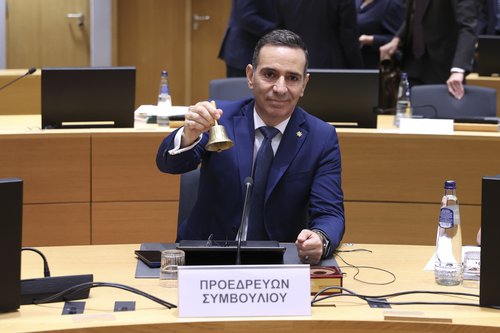
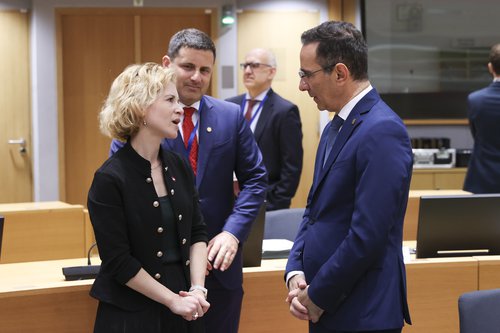
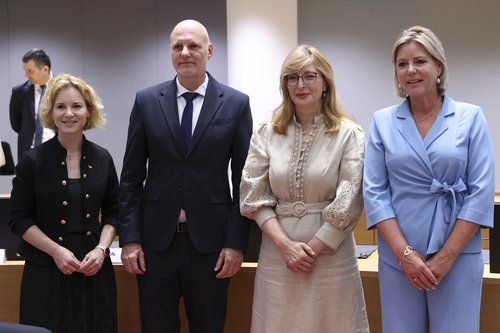
At the Competitiveness Council (Research) on 29 May 2026 in Brussels, EU ministers responsible for research discussed key elements of the future Horizon Europe package, with the Cypriot Presidency of the Council of the EU still aiming for a Partial General Approach (PGA) to be reached during its Presidency (i.e. by end of June). Ministers also adopted a Council Recommendation establishing a European framework for science diplomacy. The meeting was chaired by Cypriot Deputy Minister of Research, Innovation and Digital Policy, Nicodemos Damianou, and the European Commission was represented by Commissioner Ekaterina Zaharieva, responsible for Start-ups, Research and Innovation.
Building on the progress achieved during previous negotiations, ministers held a policy debate on politically sensitive aspects of the future Horizon Europe package, the next Framework Programme for Research and Innovation (2028-2034). The discussion focussed in particular on four key issues identified by the Presidency as critical for reaching an agreement by the end of the Cypriot Presidency: strategic priority-setting, including the alignment between Horizon Europe and the European Competitiveness Fund (ECF); the future of European Partnerships; Widening measures; and the role of bottom-up collaborative research and innovation. The overall tenor among Member States regarding the adoption of a PGA in June was positive, with Widening remaining the main sticking point. In addition to the four outstanding issues identified by the Presidency, particular attention was also given to defence research and the question of whether purely defence-related research should be financed under Horizon Europe or rather through the European Competitiveness Fund. In this context, several Member States referred to the geopolitical situation, which they argued makes such funding necessary.
The Council also adopted a Recommendation for a European Union framework for science diplomacy. The Recommendation aims to establish a shared vision, a common narrative and a pragmatic code of conduct for science diplomacy across the European Union. It seeks to strengthen the EU’s global role as a leading actor in science and technology while promoting democratic values, strategic interests and technological sovereignty. In addition, the Recommendation highlights the contribution of research and innovation to peace, multilateralism and a rules-based international order, as well as to addressing global challenges such as climate change, biodiversity loss and pollution, in line with the UN Agenda 2030 and the Sustainable Development Goals. While legally non-binding, the framework encourages stronger coordination among Member States, including through enhanced networking among science attachés and better alignment of national strategies.
Under Any Other Business, the Cypriot Presidency presented the “2026 Nicosia Call for Climate Action”, adopted during a conference held in Nicosia on 8-9 April 2026. The initiative calls for stronger regional cooperation on climate action in the Eastern Mediterranean and the Middle East through science, innovation and diplomacy.
Finally, the Irish delegation presented the main priorities of the upcoming Irish Presidency in the field of research. An informal meeting of research ministers is scheduled to take place on 20-21 July 2026 in Dublin, while the next formal Competitiveness Council (Research) meetings are planned for 25 September and 4 December 2026 in Brussels.
For more information: